sites
fortaleza | brazil
The settlements were chosen based on their size (number of dwellings), the availability of Google Street View in the settlement, and their backgrounds and locations to gather a rich range of data.

riacho doce (A)
30+ years old, 100% self-built informal settlement that grew informally from the beginning.
~ 66 dwellings

planalto universo (B)
18 years old social housing complex that grew informally overtime.
~ 640 apartment units

parque sao luiz (C)
+50 years old settlement that grew informally from the beginning.
~ 239 dwellings

cj. st. edwiges (D)
+20 years old settlement that started formally as a self-help development, in which there was city investment to build the dwelling. However, all homes were self-built by its inhabitants, back in 2004. Eventually, it grew informally.
~ 363 dwellings

vila betânia (E)
+50 years old, 100% self-built settlement that grew informally from the beginning.
~213 dwellings

poço da draga (F)
+100 years old, 100% self-built settlement that grew informally from the beginning. It started as a fisherman's village and it evolved to a permanent settlement.
~325 dwellings
how was the data gathered?
methodology

1
observational exercise
Google Street View Mapping
479 dwellings*
*at least 20% of dwellings from each settlement
observing drivers, actions and the final product (the dwellings)
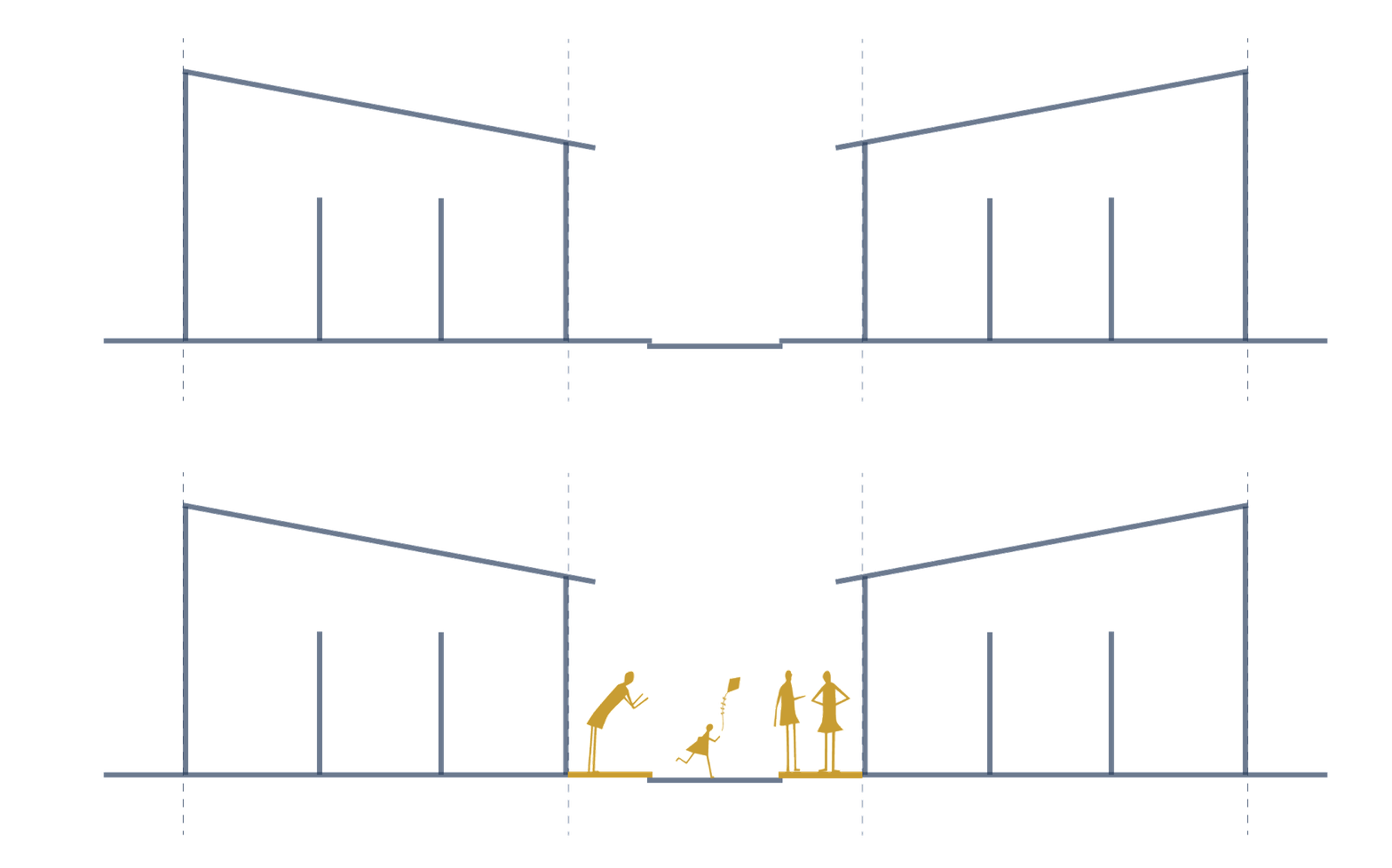
DRIVERS
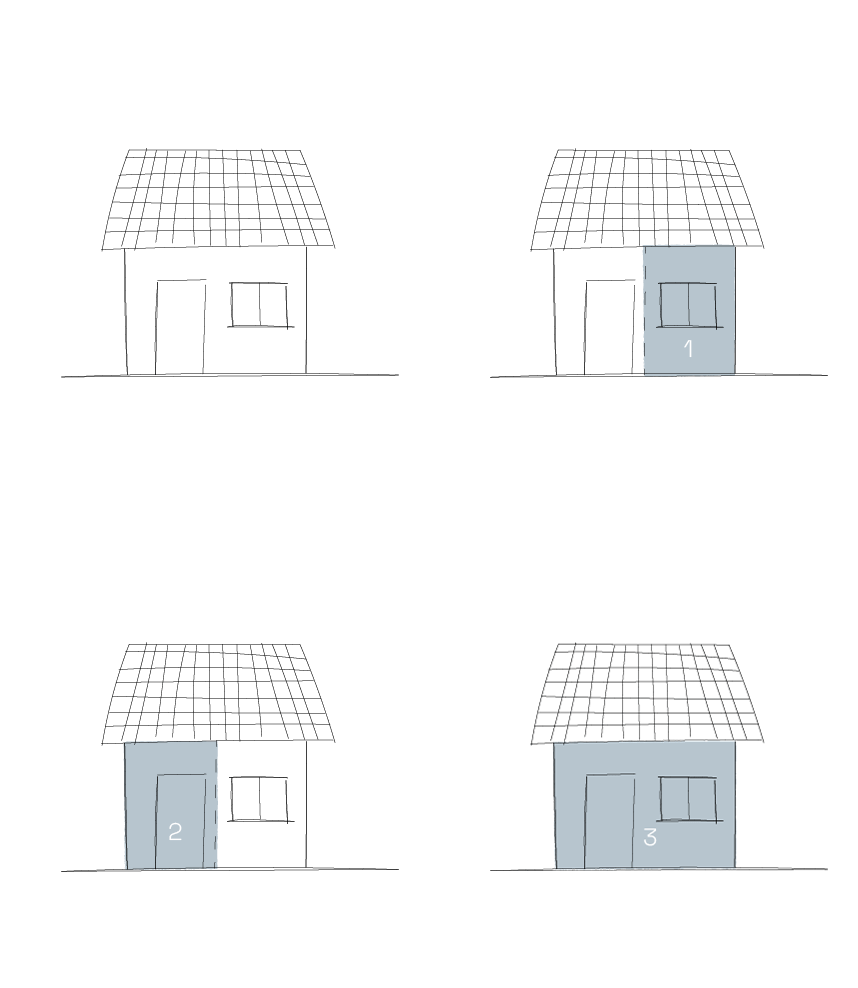
ACTIONS

PRODUCT
drivers
intimacy

income


location
commonality

browsing through the settlement via Google Street View
looking for specific community behavior, such as gatherings on sidewalks and casual stopping by conversations.
looking for live/work conditions and income related activities throughout the settlement.
looking for different types of settlement borders and how they seems to be affecting the dwellings architecture.
looking for main common public spaces, and ensuring if they seem to last a long time.
*based on Ana Rosa Chagas Cavalcanti's work (2020)
actions
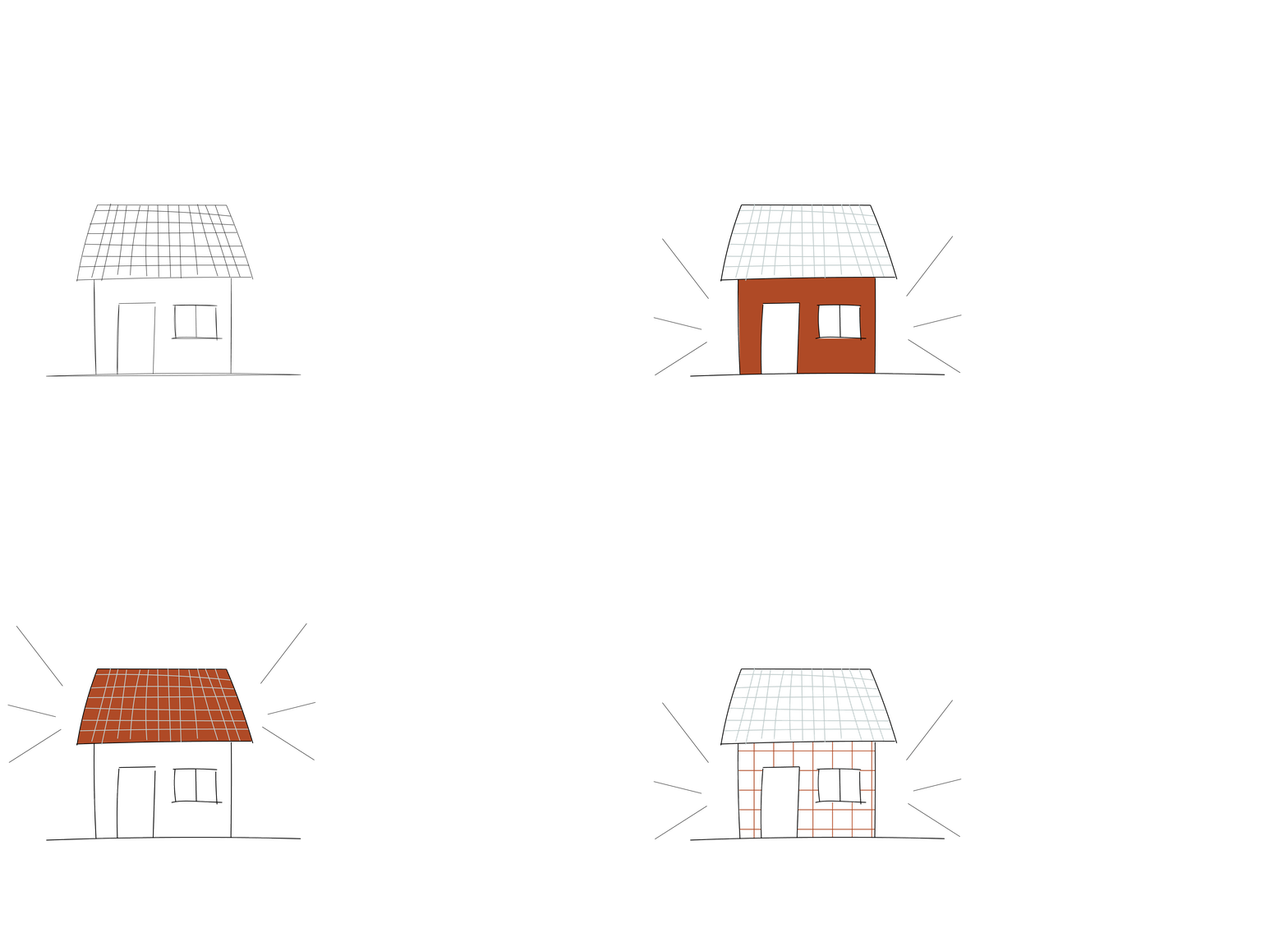
extend
attach
replace
divide
infill*
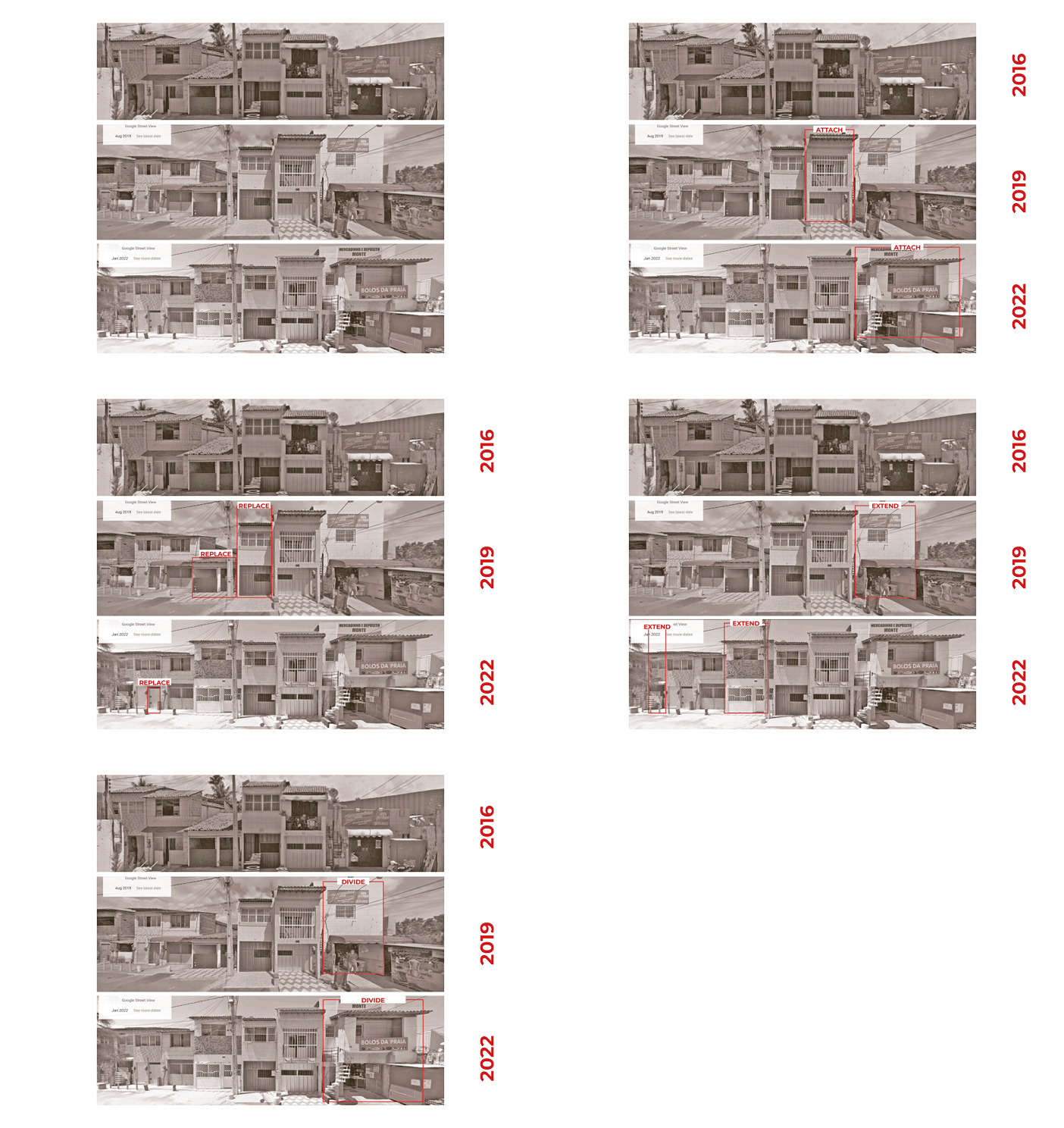
streets elevation study
Street elevation mapping was used to track dwelling modifications over the years through Google Street View.
While not all sites had the same range of years, a consistent three-year interval was applied to all sites.
Actions were categorized according to the following categories:
*based on Kim Dovey and Hesam Kamalipour


product
materiality

browsing through the settlement via google streetview
Google Street View was used to map the materiality of the dwellings in several categories.
Roof Type
Exterior Wall Finish
Presence of Balconies
Fenestration Types
Presence of Awnings
Presence of External Stairways


awnings
external stairway
balcony
2
field research
site visits
10 dwellings
questionnaire
At least one person from each selected site was interviewed. The same range of questions was asked to all of them.
The main goal was to confirm the assumptions made after the observational exercise using Google Street View.

Maria Francisca
site (a)
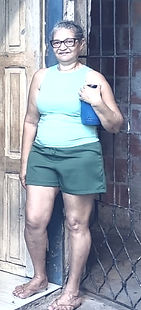
Maria José
site (b)

Elenita
site (b)

Bebé
site (c)

Inês
site (d)

Brena
site (e)

Aline
site (e)

Dona Elia
site (f)

José Valmir
site (f)

William
site (f)
site specific nuances
fortaleza | brazil
drivers
intimacy
income
location
commonality
1
Final Rank of most relevant drivers after field research of six (6) case studies

INTIMACY, more specifically multigenerational living, was by far the most important driver for renovations, alongside work. Most interviewed people claimed to have renovated their houses to fit the family/work/income needs, mostly in an incremental way, when there was money left.
LOCATION of a dwelling and the type of settlement border did influence the dwelling architecture of only a few settlements. The border type provided space for a function that the homes did not have. For instance, a wall-type border provides space for drying clothes and a space for storing construction materials, and a major-street type of border was where most businesses were located.
INCOME-related activities, such as a small business or a tenancy, were relevant in some dwellings. However, most have seemed to have happened as an afterthought after extending the dwelling for intimacy purposes and had extra space left.
COMMONALITY. Common spaces were noticed throughout the settlements. Yet, they did not seem relevant to how the dwellings evolved over time.
Initial Rank of most recurrent actions after a Google Street View Mapping of six (6) case studies
replace
attach
extend/infill
divide
actions
1
There was a discrepancy between what was observed using Google Street View and what was gathered during the site visits.
In the first part of the methodology, the order of the most performed actions throughout the sites was Replace, Attach, and Extend/Divide.
In the second part, taking into consideration ten (10) interviewed dwellers, the order is 5/10 Extend/Infill, 4/10 Replace, and 3/10 Attach. This must be related to the size of the interviewed sample.
Updated Rank of most recurrent actions after field research of six (6) case studies
(site visits & interviews)
extend/infill
replace
attach
divide
2
1
Replace
This one was the most performed action overall. This is an expected conclusion, since repairs and replacements are cheaper and easier to perform on the dwellings.
Attach
It was the second most performed action overall. Porches, balconies, roof terraces, and overhangs can be considered a bit more complex than a replacement; however, they can be infinitely easier and cheaper than building a second level/room. Overhangs can be achieved by installing temporary awnings. Balconies/terraces can be overhanging over the sidewalks.
Extend
It was the trickiest action to make sense of. It varied between second and third place among the six sites. It seemed to be related to the household income. On one hand, for those with the lowest income, the extended action came in third place. On the other hand, when the income was a bit higher, it came in second place.
Infill/divide actions were observed in both settlements that started with some kind of formal architecture and were informally infilled over time. This was not accounted for in the other settlements.
2
Extend
Incremental extensions towards a second level or toward the back of the lot throughout the years were the most common action mentioned (done or dreamed of) by the interviewed dwellers.
Replace
Small interventions were done to some dwellers, such as kitchen renovation & replacement of door and windows in the front façade (Riacho Doce), addition of stucco finish to the exterior, painting of the exterior façade (Riacho & Planalto Universo), and incremental replacement or addition of materials in the interior of the house (Planalto Universo). Or even replacing a leaking roof prior to the rainy season (Vila Betania).
Attach
We observed people installing temporary awnings at two sites, Planalto Universo and Poco da Draga, due to the rainy season.

product
Rank of most recurrent materials for ROOF TYPE
clay tiles
metal sheet
asbestos sheet
Material-wise, all neighborhoods presented the same material palette.
The dwelling heights stayed between 1 and 3 levels, mostly. The same was observed in both parts of the methodology.
The household income was the main cap when choosing the type of materials in the façades and the number of upgrades performed to the dwelling.
Rank of most recurrent materials for
EXTERIOR WALL FINISH
stucco
ceramic tiles
unfinish brick
Presence of BALCONY
not common
Rank of most recurrent materials for
FENESTRATION (doors & windows)
glass panel & aluminum frame
cast iron
wood
Presence of AWNINGS
not common
Rank of most recurrent materials for
EXTERNAL STAIRWAY